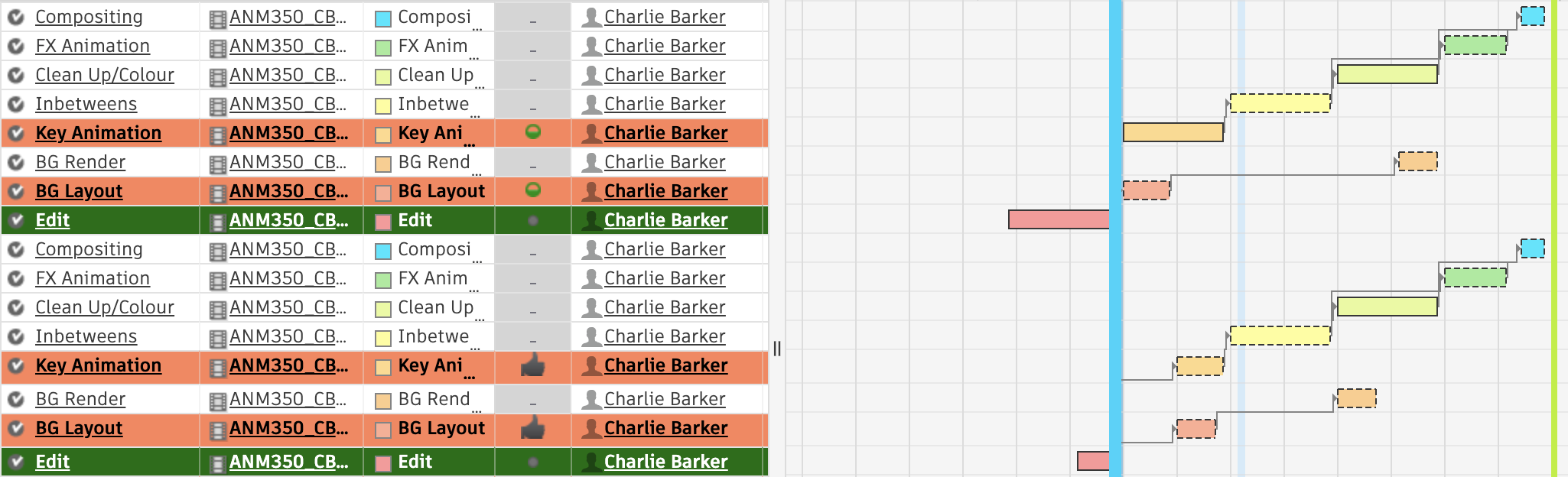
It’s one software, but depending on who it is you’re talking to, it can be called any one of three different things. What is the history of Autodesk’s Flow, and why does it have so many loyalists to its old names?
Let’s go back to the beginning.
Flow started as an indie software called ‘Shotgun’, which was developed by a team of industry professionals. Development began in 2006, led by Don Parker and Isaac Reuben, and saw nine studios work with the software as it was worked on. Whilst the original release date was 2008, it wasn’t until 2009 that the software became available – although only on an invitation-only basis as a private beta. Still, it had glowing reviews even at this point. In 2010, Shotgun became available for purchase.
The idea behind shotgun was for it to be a living, breathing workplace: one that was frequently used not only by the producer, but by the artist.
“We believe that for a system to really work in such a dynamic environment, it has to be used, and relied upon, by everyone in the studio. And because everyone relies on the system to do their work and communicate with each other every day, the information stays up to date. It is updated by many, not a few. It's a collaboration tool, not just a tracking tool.”
Support quickly grew, with Shotgun soon supporting hundreds of studios across the film and TV industry. It eventually caught the eye of software company Autodesk, who later acquired Shotgun in June 2014. Shotgun’s original team continued to be the primary developers and provided support for the software for many years up until June 2021.
Fifteen years after Shotgun was born, Autodesk announced that they would be rebranding it as ‘Shotgrid’, a name which “suggests a connected network and workflow and aligns more closely with the Autodesk brand and product philosophy”. This rebrand saw the end of Shotgrid’s original systems, transferring the software over to Autodesk’s standardised set up for servers, subscriptions and support. This name change was not particularly popular. Interestingly, one former Autodesk employee claimed the rebrand was intended to make the name “less problematic”, although I was unable to verify this reasoning through any other source.
Shotgrid and Shotgun – the names are quite similar. Many professionals continued to say ‘Shotgun’ without much trouble, as after fifteen years the name had certainly stuck. Even to younger members of the industry who were not present during the many years of Shotgun, the similarity allowed for an understanding of what was being discussed.
The same cannot be said for Shotgrid’s most recent rebrand to Flow.
Fewer than three years after rebranding to Shotgrid, the software was renamed to ‘Flow Production Tracking’. Autodesk’s description of this new title is as follows:
“Creativity requires freedom. Whether you’re a director, artist, editor, or production manager — bringing your dreams into being means eliminating the barriers that stand in your way. Autodesk Flow is laying the foundation for that freedom. The name change signals the beginning of this journey.”
But with the name being changed so soon after the initial rebrand, many users were left disgruntled. Autodesk seems to acknowledge that this move has not been entirely successful, with many industry veterans refusing to use the new name, as the forum website continues to be found at community.shotgridsoftware.com. An interesting choice, indeed.
I’ve certainly found that whilst my own generation of creatives tends to say ‘Flow’, the majority of experienced industry professionals I speak to will either use ‘Shotgun’ or ‘Shotgrid’. Regardless, the software is brilliant at fulfilling its purpose. My biggest concern, then, is what title I should use for the software at interview – what a conundrum!