Wrapped with a Bow on Top: Reflecting on the Production of The Best Part
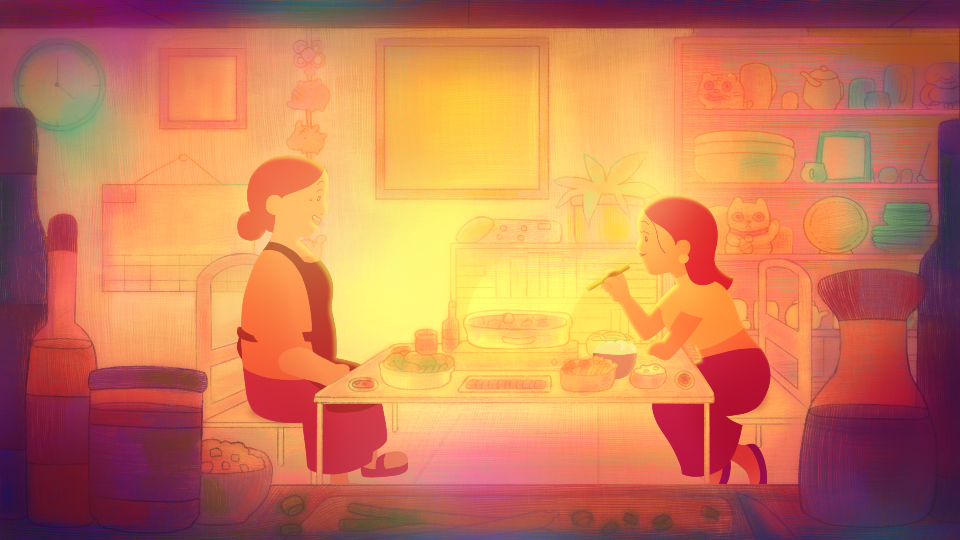
After 9 months of hard work, groaning over retakes, and the occasional crew social, I am delighted to share that animation production of The Best Part officially wrapped in April, with the film being officially finished, music and all, by the end of June. What a journey it has been! We are ever so pleased with the final result, and I am grateful to our 27 person crew for getting us across the finish line with relatively few hiccups.
With the film finished, I thought I would take the opportunity to briefly reflect on the production process. Many of the intricacies of production have already been covered in my The Best Part: Production So Far blog post, so do check that out if you are interested in hearing about the process of establishing a production timeline, good team practices, and finding external talent. You can also read about the fundraising effort in my blog post The Secret Jobs of the Producer: Running a Marketing Campaign. Today, I would like to look at the project overall.
The Good
My decision to schedule animation for completion in March is one that I am very happy with. The main reason for this was to provide a safety net, allowing extra time should the production schedule have to be pushed to ensure the film would be completed for our May 2nd deadline. However, we fortunately did not encounter any major hiccups (which, if I were to toot my own horn, I might attribute to my tight running of the ship), and in fact finished animation a couple of weeks ahead of this schedule. All this extra time, then, was time which we were able to use for retakes. From my experience, a common pitfall which student films often fall into is over-stretching themselves – by giving themselves a gargantuan task, they tend to end up with not enough time to polish off the look of the film, rushing through animation to complete it for hand-ins. I have certainly felt this in previous productions. To be able to watch through the film as a team, pick out shots that we felt were lacking, and then have the time to improve them certainly felt like a privilege. Of course, those original shots won’t see the light of day. Trust me when I say the difference is tangible!
Another nugget of wisdom I learnt: never, ever underestimate freelancers. Our freelancers, although only doing two or three pieces of work each, cumulatively made a huge difference to the production and allowed our core team members to really spend time perfecting the tricker shots.
The Bad
The biggest mistake I made – because it’s good to acknowledge mistakes and learn from them – was not prioritising voice actors as much as I should have. Standard productions would get voice lines recorded far earlier in the process, often before animation even begins, but as a student film we faced numerous unknowns which I felt justified my decision to jump into animation as quickly as possible. We animated shots without lipsync whilst we found actresses, had recorded with two of our three necessary voice actresses by the time we moved on top lip-sync shots. Our final actress, though, took a while to find. I detail the process in my blog here, but as we were reluctant to spend money on a voice actress as a student film with no guaranteed budget, I put off hunting down a professional actress for as long as possible in hopes that an acting student would get in contact and give us a free option (as is standard for Falmouth students). I certainly held off for too long in this situation, which led to having to animate some shots without the voice lines and then going in and adding lipsync afterwards: not necessarily an issue, as some productions do follow this workflow, but the problem was that as we didn’t have any voice lines to reference it was much harder for animators to give the characters an effective performance. When doing retakes, these shots tended to be the ones that had room for improvement. Of course, I have learnt my lesson now – never again will I overlook the necessity of voice lines! It was a rookie mistake, one that came from this being my first time working on a project requiring lipsync, and one that I don’t intend to make again.
Final Thoughts
Overall, everything went smoothly. What a lovely thing to be able to say! The team all held themselves to a professional standard – not something you always see in students – and their willingness to be produced made my experience an incredibly positive one. I feel that I have learnt a lot and really pushed to make the production as polished as possible, conducting a lot of research on best practice in order to perfect production pipelines and practices.
Whilst the rest of the team relaxes, I am busy continuing to market the film and managing our festival run. We have already been selected as finalists for The Rookie Awards 2026 and will be premiering the film at Bath Film Festival, so we are off to a good start. Hopefully more news to come!